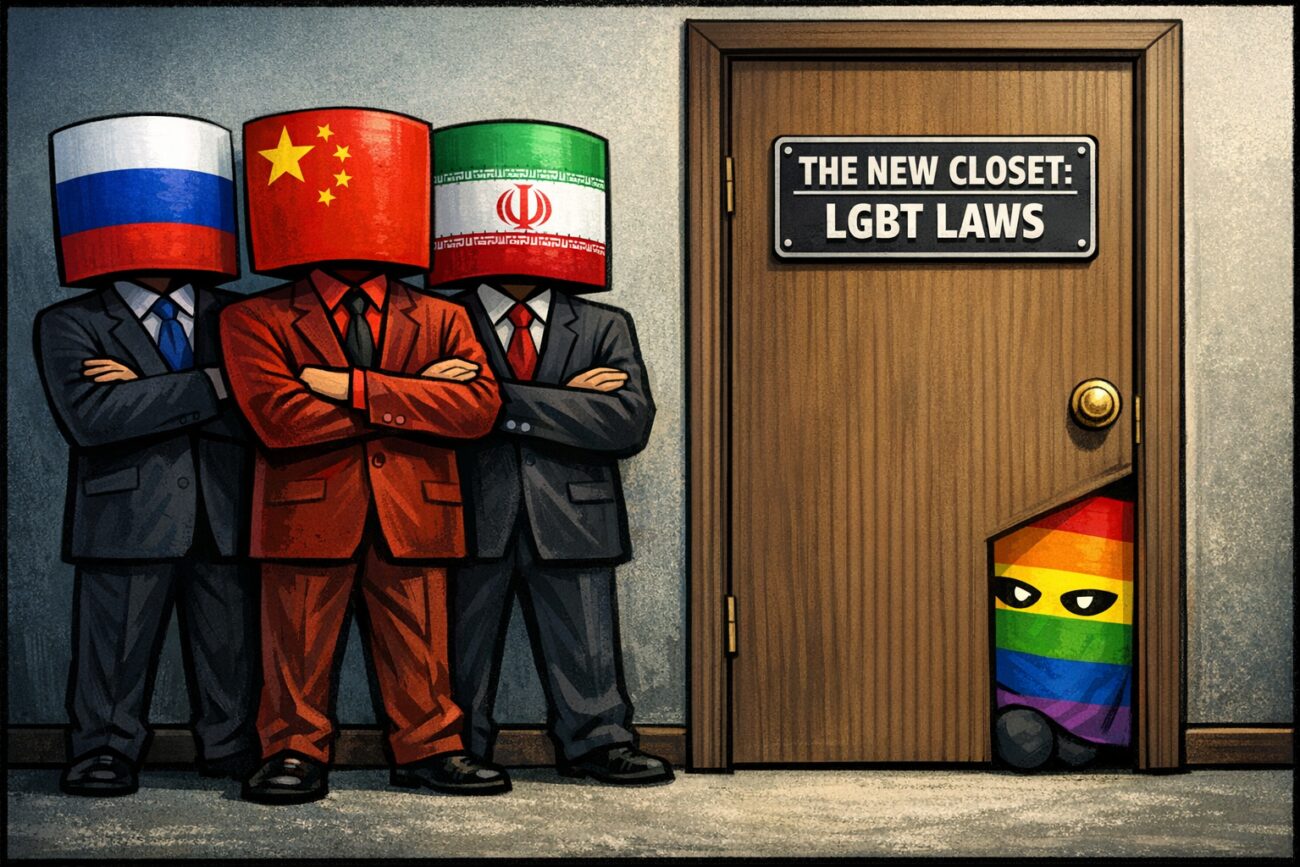
Governments around the world have gotten savvier about how they package old‑fashioned homophobia. Instead of outright bans or morality codes, they now hide discrimination behind soft‑focus language like “protecting children,” “cultural values,” or “public harmony.” It’s the same hostility, just wrapped in a friendlier press release. This new closet isn’t for queer people—it’s for politicians who want to enforce anti‑LGBTQ norms without looking like they’re enforcing anti‑LGBTQ norms.
What makes this trend especially insidious is how it reframes queer existence as something powerful enough to threaten a nation’s stability. When leaders call LGBTQ visibility “propaganda,” they’re not just restricting rights—they’re pretending queerness is some kind of weapon. It’s a convenient narrative: erase queer people while claiming you’re the one under attack. And yet, despite the rebranding, the goal hasn’t changed. These laws still push LGBTQ people back into silence, back into fear, back into the margins.
The irony is that the more governments try to legislate us out of public life, the more obvious our presence becomes. Queer people don’t disappear; we adapt, we organize, we speak louder. The new closet may be polished, modern, and PR‑tested, but it’s still a closet—and history has never been kind to the people who build them.
The New Closet