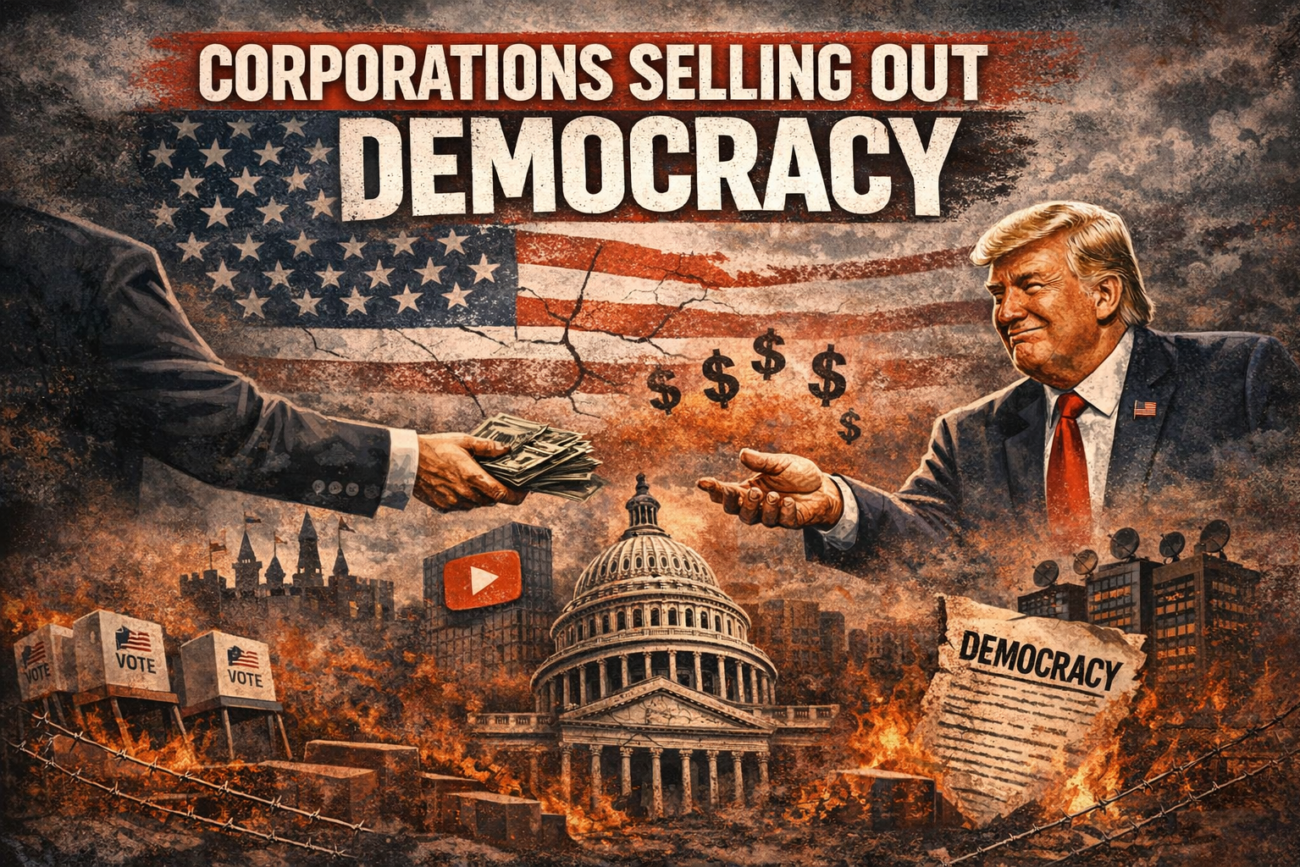
A growing number of commentators argue that major corporations continue to avoid confronting political pressure, even when doing so may undermine democratic norms. The pattern they point to is familiar: large companies with vast legal resources choosing to settle lawsuits brought by Donald Trump rather than fight cases that legal analysts widely viewed as weak. Recent examples frequently cited include Disney, Meta, and YouTube. Collectively, these settlements have transferred more than $60 million to Trump. Analysts note that while this amount is relatively small for companies of that scale, the symbolism is significant. Legal experts quoted in news coverage have said these corporations were well-positioned to prevail in court, which raises the question: why settle?
Commentators who are critical of these decisions argue that the settlements function as a form of appeasement. In their view, corporations are attempting to maintain favorable conditions for their business operations under the current administration. By avoiding prolonged conflict, they hope to protect short‑term interests such as regulatory stability, market access, and executive relationships. Critics warn that this strategy carries long‑term risks. They argue that if corporations prioritize short-term profit over institutional stability, they may inadvertently contribute to the erosion of democratic norms. The concern is not about any single settlement, but about the cumulative effect of powerful institutions declining to push back when political pressure is applied.